
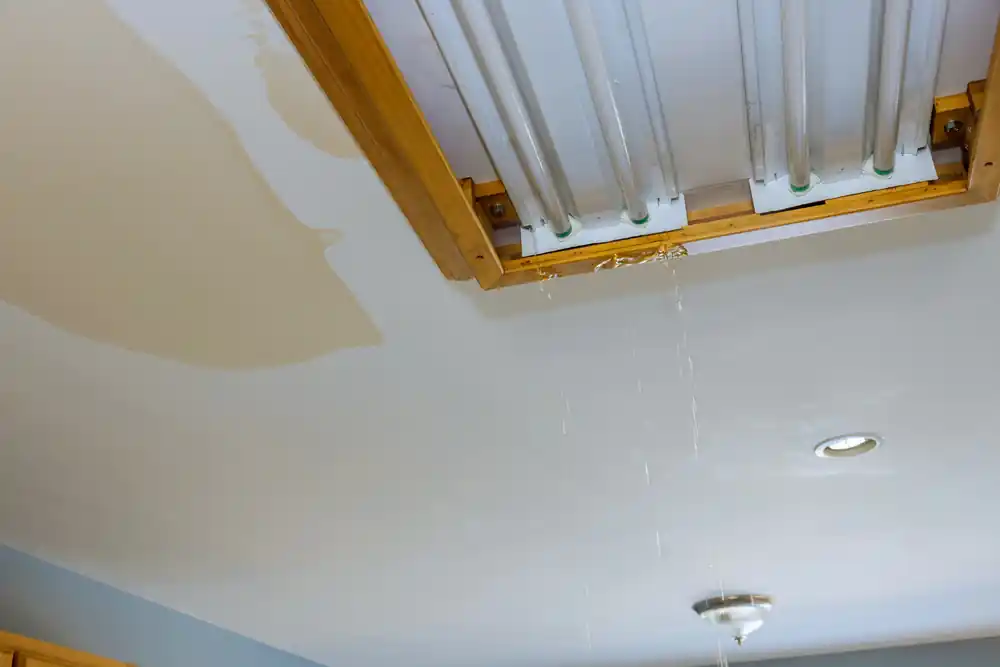
Water Coming Through the Ceiling in Simpsonville SC? You May Have a Burst Pipe
That Water Stain on Your Ceiling Isn’t Just Cosmetic
You notice a wet spot on the ceiling one morning, or water actually dripping from a light fixture, or a patch of drywall that’s gone soft and spongy overhead. Your first thought is usually a roof leak, but if there’s no rain or the stain appeared on a clear day, you might be looking at something happening inside the walls instead. Water coming through the ceiling in Simpsonville, SC is often a sign of a burst or cracked pipe running through the space above, and treating it as just a ceiling problem while ignoring the pipe damage underneath is how a contained repair turns into a catastrophe. Call 864-263-2847 if you’re seeing water dripping from or pooling on a ceiling and you’re not sure where it’s coming from.
Ceiling Water Usually Means a Pipe Failure Happening Directly Above
Water that appears on a ceiling or drips from a light fixture is almost always coming from somewhere directly overhead, not traveling through walls from a distant source. That means a leaking or burst pipe in an attic space, crawlspace, or the wall cavity above that ceiling is the likely culprit, not a roof issue or plumbing failure in a bathroom below. The water is flowing downward through gravity and finding its way through gaps in the drywall, around electrical boxes, or through the fasteners holding your ceiling in place.
Simpsonville homes built with crawlspaces above first-floor ceilings, or with attic spaces above second stories, often have supply lines running through these overhead areas to reach fixtures on upper levels. If one of those lines develops a crack or joint fails, water drips down steadily until it soaks through the drywall below, and by the time you see the stain on your ceiling, the pipe has usually been leaking for hours or longer. The longer the leak runs unaddressed, the more drywall absorbs water and the higher the risk of mold developing in that hidden space above your head.
Determining What’s Causing the Ceiling Water
Not every ceiling stain means a burst pipe, but the pattern of the water and when it appears tells you a lot about what’s actually happening overhead. Understanding these patterns helps you explain the problem clearly to a plumber and get them looking in the right place.
- Water appears even on days with no rain: almost certainly a pipe leak, not a roof issue
- The stain is directly below a light fixture or electrical outlet: check if there’s plumbing running through that wall cavity above
- Water drips from a specific spot consistently: the leak source is likely directly overhead in that location
- The stain is concentrated in one area rather than spread across the ceiling: points to a localized leak, not widespread roof damage
- The drywall feels soft or spongy when you press on it: water has been soaking through for hours or longer
- You smell mold or mildew near the wet ceiling: the hidden space above has been damp long enough for growth to start
A burst pipe creates a different pattern than a slow leak. A burst usually produces noticeable water volume relatively quickly, so the ceiling stain appears suddenly and the flow might be obvious when you look into the space above. A slow crack in an older pipe might drip steadily for days before the accumulated moisture becomes visible on the ceiling below, so you’re dealing with a water stain that appeared gradually without obvious water flow. Either pattern points to a professional assessment, but understanding which pattern you’re seeing helps the plumber know what to look for.
Warmer Water & Plumbing Locates the Pipe Before Assuming It’s the Roof
The wrong diagnosis leads to the wrong repair, which is why getting a professional to actually look at what’s causing the ceiling water matters before you start planning a roof replacement that might not be the problem. A plumber can access the space above your ceiling, locate whether a pipe is actually leaking, and determine whether the water is from a burst pipe that needs immediate repair or from a slower crack that’s been developing for a while. That diagnosis shapes the entire repair strategy and prevents you from paying for roofing work when the actual problem is burst pipe repair inside your walls.
Don’t Ignore Ceiling Water and Hope It Goes Away
A wet ceiling doesn’t dry itself out once a pipe stops leaking. The moisture that’s soaked into drywall, insulation, and framing stays there, supporting mold growth and wood rot in spaces you can’t see until the damage is severe. The moment you notice water on a ceiling, the smart move is getting a professional to determine whether it’s a roof issue or a pipe issue. If it’s a pipe, waiting makes the repair more complex and more expensive as water damage spreads through hidden spaces. In Simpsonville, ceiling water often means a pipe problem, not a roof problem, so don’t assume and don’t delay. Call 864-263-2847 and get the actual source identified before water damage compounds into something much bigger.
0 Comments