

Water Heater Repair or Replacement in Simpsonville, SC? Signs, Lifespan & Cost Factors
The water takes a little longer to heat up than it used to, and now there’s a faint popping sound coming from the tank in the closet. You’re standing there wondering whether this is a quick fix or the start of something bigger, and whether it’s worth spending money on a repair for a unit that might fail anyway in a year. If you’re weighing water heater repair against replacement in Simpsonville, SC, the answer depends on a few specific factors, not a guess. Call 864-263-2847 and get a straight answer instead of a coin flip.
Why This Decision Feels Harder Than It Should
Nobody wants to spend money fixing something that’s about to fail anyway, and nobody wants to replace a unit that had years of life left in it. The trouble is that most homeowners don’t have a clear way to tell the difference between a minor issue and a unit that’s genuinely at the end of its road. A popping sound, a slow recovery time, or a pilot light that won’t stay lit all feel similarly alarming, even though they point to very different situations underneath.
The honest answer almost always comes down to two things: how old the unit is, and what’s actually failing inside it. Those two factors together tell you far more than either one on its own.
How Age Changes the Math
Most tank water heaters last somewhere between 8 and 12 years, depending on water quality, usage, and how well the unit has been maintained. A five year old unit with a failed heating element is usually worth repairing, since the tank itself likely has plenty of life left. A twelve year old unit with the same failed element is a different story, because you’d be paying to fix one part while the rest of the tank is quietly approaching its own failure point.
Simpsonville’s water tends to run harder in some neighborhoods than others, and harder water accelerates sediment buildup inside the tank. That buildup makes the unit work harder to heat water, shortens its effective lifespan, and increases the odds that a repair today just delays a bigger failure next year. Checking the unit’s age, usually printed on a manufacturer’s sticker near the top of the tank, is one of the fastest ways to get oriented before any other conversation happens.
Signs That Point Toward Repair
Some issues are genuinely isolated and worth fixing on their own. A pilot light that won’t stay lit, a thermostat that’s misreading temperature, or a heating element that’s failed are all typically contained problems that don’t affect the rest of the tank. If the unit is under ten years old and otherwise in good shape, addressing one of these issues usually restores normal function for years to come.
A tank that’s still structurally sound but showing inconsistent hot water, meaning it works but doesn’t quite keep up the way it used to, is also often a repair situation rather than a replacement one. The key question is whether the tank itself is compromised or whether a specific component inside it has simply worn out.
Signs That Point Toward Replacement
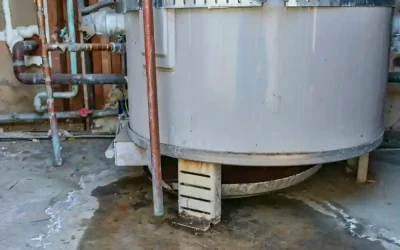
Rust colored water coming specifically from the hot tap, rather than from both hot and cold, usually means the tank itself has started corroding from the inside. That’s not a component issue, that’s the tank’s structure breaking down, and no repair fixes that. Any visible moisture or pooling water around the base of the tank is a similar signal, since it often means a crack has already formed in the tank wall.
A unit that’s required more than one repair in the past year or two is telling you something even if each individual repair seemed reasonable at the time. And any unit beyond the 10 to 12 year mark that’s showing any of these symptoms is usually past the point where repair makes financial sense, even before getting into specific numbers.
- Rust colored water from the hot tap specifically
- Visible moisture, rust, or pooling around the base of the tank
- More than one repair needed within the past year or two
- Unit is beyond 10 to 12 years old with any new symptom
- Popping or rumbling sounds that have gotten louder over time, a sign of heavy sediment buildup
Why the Real Cost Question Isn’t the Sticker Price
The cost of any repair or replacement depends entirely on what’s actually wrong, the size and type of unit involved, and what your home’s setup requires, so there’s no honest single number to give you upfront. What matters more is the cost of getting the decision wrong. A repair on a tank that’s already failing internally often means paying twice, once for the repair and again for the replacement a few months later when the tank fails anyway. On the other end, a small leak that goes unaddressed because a homeowner is trying to decide what to do can turn into a flooded utility closet or damaged flooring, and that kind of water damage costs far more to fix than the water heater itself ever would.
That’s really the calculation worth making. A short delay to figure out whether repair or replacement makes sense is reasonable. Letting a known issue sit for months while you decide is where small problems turn into expensive ones.
Why Simpsonville Homeowners Trust This Evaluation
An honest recommendation means telling a homeowner when repair is genuinely the better call, even when replacement would be the easier sale. Warmer Water & Plumbing looks at the specific unit, its age, and what’s actually failing before recommending either path, so the answer fits your water heater instead of a general rule of thumb. If a full water heater replacement turns out to be the right move, you’ll understand exactly why before any work begins. If it’s a contained issue, water heater repair gets you back to normal without paying for a new unit you didn’t need.
Get a Straight Answer About Your Water Heater
You don’t have to guess whether that sound, that leak, or that inconsistent hot water is something serious. A quick look at the unit will tell you whether repair or replacement is the smarter call for your specific situation. If you’re in Simpsonville and ready to stop wondering, call 864-263-2847 today and get an answer built around your water heater, not a guess.

0 Comments