
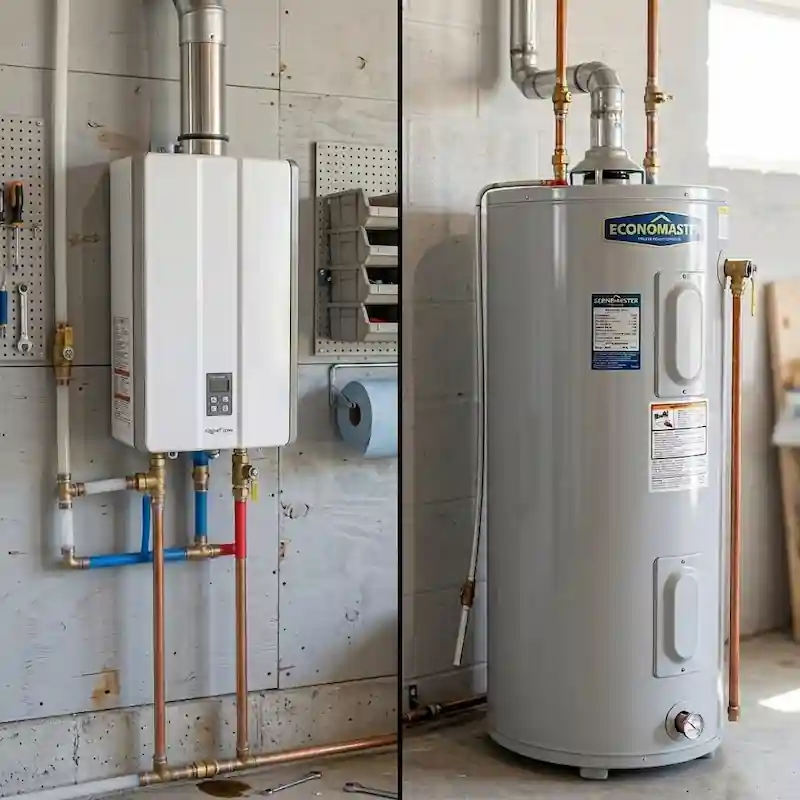
Tankless vs. Traditional Water Heaters: Which Is Better for Mauldin Homes?
Same Hot Shower, Very Different Ownership
On the first morning, a tankless water heater and a traditional tank deliver the same thing: a hot shower. The differences show up later, in what each one asks of you and how each behaves on a bad day. If you are weighing a tankless water heater in Mauldin, SC against a standard tank, those later differences are worth knowing before you buy. This guide walks through what daily life looks like with each, and if you would rather talk it over, call 864-966-2444.
How Tankless and Traditional Water Heaters Compare After Installation Day
Both types give you hot water. They differ in the upkeep they need, how they behave at low flow, what happens in a power outage, and how repairs go.
Maintenance
A traditional tank collects sediment on the bottom, so an occasional flush and a look at the anode rod, the part that corrodes so the tank does not, keep it healthy. A tankless unit needs its own routine: a periodic descaling flush that clears mineral buildup from the heat exchanger. How often depends on how hard your water is, and skipping it lets scale build up and cut performance. Neither type is maintenance-free, but the tasks are different.
Behavior at Low Flow
A tankless unit starts heating only when enough water moves through it. A very light trickle from a low-flow faucet may not trigger it, and the water can run lukewarm or cold. A tank heater has no such threshold, because the hot water is already waiting. If you use low-flow fixtures or run a bathroom sink at a slow stream, mention it to your plumber.
The Wait for Hot Water
Many people expect tankless to end the wait at the faucet. It does not. The delay comes from the cold water already sitting in the pipes between the heater and the fixture, and that water has to be pushed out first. Both types deliver the same wait at a faucet far from the heater, unless the home has a recirculation system.
Power Outages
This one surprises people. Even gas tankless units need electricity to run their controls and ignition, so a power outage means no hot water. A tank is different because it already holds a supply of heated water. During a short outage you can still draw from the tank until it runs down.
Repairs
A tankless unit packs sensors, a control board, and a heat exchanger into a compact body. That makes it capable, and it can also make repairs more involved. A traditional tank has a simpler set of parts, which generally makes problems easier to diagnose. When something fails, the repair path is part of what you are choosing.
Questions About Ownership Worth Asking Yourself
The right choice often depends less on the unit and more on how you feel about upkeep and backup. Three questions bring that into focus.
First, will you schedule a descaling flush on a regular basis, or would you rather install something and forget it? Second, how often does your power go out, and would losing hot water during an outage matter to your household? Third, do you rely on low-flow fixtures that might not trigger a tankless unit? Honest answers to these often settle the question faster than a spec sheet.
Why Mauldin Homeowners Ask Warmer Water & Plumbing About Tankless
Warmer Water & Plumbing can walk you through both options with the ownership details, not just the installation. That conversation covers upkeep, backup, and how each unit would fit the way your household actually lives.
If you are leaning tankless, our tankless water heater installation page explains how those projects work. If a standard tank suits you better, our water heater replacement service covers that path. Either way, the goal is a choice you will still be happy with years from now.
Choose the Water Heater You Will Be Glad to Live With
Picture a morning years from now when the shower is hot, the upkeep is routine, and the choice still feels right. That comes from picking the unit for how you will live with it, not just how it looks on paper. For homeowners in Mauldin, a quote starts with a single call to 864-966-2444.

0 Comments